

MACONDO
A HOMELAND FOR WRITERS
Macondo Writers Workshop Guest Faculty in 2026

MIXED-GENRE: Jan Beatty
Jan Beatty’s work has been published in the Atlantic, the New York Times Sunday Magazine, Poetry, and Best American Poetry. Her eighth book, Dragstripping, was published by the University of Pittsburgh Press, 2024. She was featured in Poetry magazine in December, 2024, and her poem, “Stripshot,” was named one of the best poems read in 2024 by 50 Contemporary Poets on LitHub. Beatty is the winner of the Red Hen Nonfiction Award for her memoir, American Bastard, 2021. Of her sixth book, The Body Wars, Naomi Shihab Nye said in the New York Times: “Jan Beatty’s new poems shimmer with luminous connection, travel a big life and grand map of encounters.” Other books include Jackknife: New and Collected Poems (Paterson Prize) named by Sandra Cisneros on LitHub as her favorite book of 2019. Awards include the Agnes Lynch Starrett Prize, Discovery/The Nation Prize finalist, Pablo Neruda Prize, Artists Grant from The Pittsburgh Foundation, and a Creative Achievement Award in Literature, Heinz Foundation. Beatty worked as a waitress, abortion counselor, and in maximum security prisons. She is Professor Emerita at Carlow University, where she directed creative writing, the Madwomen in the Attic workshops, and the international low-residency MFA program.
The Hybrid Voice: Hauntings, Leapings, Framings, and Risk
“The world I create in writing compensates for what the real world does not give me.”
—Gloria Anzaldua
How do we blast through the limited categorizations of genre while focusing on precise detail, clarity, and effective movement? As we live in complex, often unraveling identities, how do we access the moments that haunt us, stay with us? These can be strong, positive moments or disturbing, heartbreaking moments. How can we use craft to help gain that access? In this generative workshop, we’ll look at examples of leaping in poetry and prose, as we write sometime intersecting or ambiguous genres. What if your writing seems to live in the fault lines between genres? As we straddle uncertain boundaries, we may find ecstatic energy in leaping, creating openings for unexpected voices to enter.
As you respond to different prompts, we’ll share our writing in a welcoming and supportive space, as we receive feedback in all genres. We’ll talk about the textuality that can rise from crossing genre lines in a piece of writing and how “framing” a poem, essay, or chapter can evoke clarity, voice extension, or discovery. We’ll consider examples of writers who take risks in terms of form and content, delivering the reader to the “inside” of the poem or story. As we develop new drafts, how can we stretch our writing and break down self-censorship to encounter the stories that define us, always moving along the line of uncertainty.
Suggested Readings
- boy, Consuelos Wise, Omnidawn, 2024
- Querida, Nathan Xavier Osorio, Winner, 2024 Agnes Lynch Starrett Poetry Prize
- Unmothered | Untongued, Lyric Essays by Lee Horikoshi Roripaugh, Sue William Silverman Prize for Creative Nonfiction, AWP Award Series Winner, University of Georgia Press, 2025.
MORE INFORMATION:
boy, Consuelos Wise, Omnidawn, 2024 (A hybrid book-length poem in which the protagonist grapples with a great loss. In this hybrid of lyric poetry and essay, Consuelo Wise utilizes repetition, fragmentation, and syntax to construct a form that repeatedly falls apart. Breaks in lines and fragmented stanzas are followed by accumulative rushes, slashes, brackets, and words pushed together.)
Querida, Nathan Xavier Osorio, Winner, 2024 Agnes Lynch Starrett Poetry Prize. (Querida offers a place-based lyrical meditation on the poet’s immigrant parents, collective memory, language, and family in the San Fernando region of Los Angeles, California. Through a constellation of interweaving persona poems, confessional reflections, imagistic portraits of people and places, and decolonial poetic rituals—a choir of speakers navigate the generational trauma of migration, coloniality, and the exploitative labor of late-stage capitalism.)
Unmothered | Untongued, Lyric Essays by Lee Horikoshi Roripaugh, Sue William Silverman Prize for Creative Nonfiction, AWP Award Series Winner, University of Georgia Press, 2025. (unMothered, unTongued is written from the liminal space of the in-between. These essays are oftentimes braided, oftentimes patchworked, oftentimes segmented. Lee Horikoshi Roripaugh, a biracial LGBTQIA+ Nisei who was born and raised in Laramie, Wyoming, to a non-native-English-speaking Issei mother, considers not only the tensions in the rifts between intersectional identities (biracial Nisei, LGBTQIA+) but also the tensions between marginalized identities and the landscapes and cultures of the American West; the tensions between nonnative, second, erased, and/or forgotten languages; and the tensions between those who abuse and those who survive.

Fiction: Robert Jones Jr.
Robert Jones, Jr. (formerly known on social media as “Son of Baldwin”) is a Brooklyn, New York-based writer and public speaker. He is the author of The New York Times bestselling novel, The Prophets, which won the 2022 Publishing Triangle Edmund White Award for Debut Fiction, and was a finalist for the 2021 National Book Award for Fiction. His writings have been featured in The New York Times, Essence, Variety, and The Paris Review, as well as in the critically acclaimed anthologies Four Hundred Souls and The 1619 Project. The Prophets was named one of “The 25 Most Influential Works of Postwar Queer Literature” by The New York Times. Subscribe to Robert’s newsletter, Witness, at robertjonesjr.substack.com.
Our Confrontations with “The Other”
“We can disagree and still love each other unless your disagreement is rooted in my oppression and denial of my humanity and right to exist.”
—Robert Jones, Jr. http://bit.ly/4qslJkq
We have all confronted various forms of media in which the lives and experiences of characters of marginalized identities (whether that be age, class, ethnicity, gender, gender identity, race, religion, sexuality, and so on) are rendered in ways that pathologize, stereotype, and flatten what, with more consideration, conversation, and research, could have been a much more nuanced, dimensional, and authentic representation. During this generative workshop, we will explore what I believe is the very purpose of fiction: To place us in someone else’s shoes. As numerous studies have revealed, fiction is instrumental in the development of critical thinking and empathy (“The Case for Reading Fiction” by Christine Seifert) —two things that we are in dire need of as we face the challenges and uncertainties of contemporary political realities.
The late, great Toni Morrison once said that while the conventional wisdom is to “write what you know,” she encouraged her students to do the complete opposite and write about experiences outside of their realms of comfort. These days, many writers are terrified to do this because with the advent of social media, the consequences for making a mistake, failing, or possibly offending an audience with certain portrayals are often swift, vicious, and unrelenting. So-called cringe culture has made it so that trying has become synonymous with shame and embarrassment. My questions, though, are: How will you learn if you don’t try? Isn’t failure really just an opportunity to learn and do better the next time? What is growth if not the often-uncomfortable movement from ignorance to enlightenment? What can we learn about ourselves—our points of view, our beliefs, our experiences—from our attempts to authentically render, on the page, the lives are people who are different from ourselves? Why must we make others more like ourselves in order to grant them a basic human value? Why have we decided that certain intrinsic differences give us permission to deny dignity, respect, or even life to other human beings? I don’t claim to have the answers to those questions, but I do believe that as a witness, it is my job to raise them and wrestle with them—possibly for the rest of my life.
My goal is to provide a safe, fun, honest, respectful, and nonjudgmental space where artists who are open to being vulnerable, taking risks, erring and trying again, learning from the testimonies of others, and being good witnesses can explore, artistically, how to interrogate our own gazes and create characters that defy the dehumanizing features proliferating Western media to capture the full humanity of people at the margins—embracing differences rather than attempting to erase them. By the end ofour time together, I would like for each participant to have rendered a character and situation, of at least 2-3 pages, that demonstrates what they have learned from our discussions.

Mixed Genre: Marilyn Chin
Marilyn Chin is an award-winning writer, and her works have become Asian American classics and are taught all over the world. She has published six books of poetry and one book of fiction. Her newest book of poems is called SAGE (W.W.Norton, 2023). Her best hits collection is called A PORTRAIT OF THE SELF AS NATION: NEW AND SELECTED POEMS (W.W. Norton, 2018) She has also published a book of wild girl fiction called REVENGE OF THE MOONCAKE VIXEN.
She has won numerous awards, including the Ruth Lilly Poetry Prize for lifetime achievement, the Anisfield-Wolf Book Award, the United States Artist Foundation Award, the Radcliffe Institute Fellowship at Harvard, the Rockefeller Foundation Fellowship to Bellagio, two NEAs, the Stegner Fellowship, A Lannan fellowship, the PEN/Josephine Miles Award, a Fulbright Award to Taiwan, and others.
She has translated the works of Ai Qing, Gozo Yoshimasu, Ho Xuan Huong and others and is presently writing a Cantonese-American opera.
She is featured in major anthologies, including The Norton Anthology of Literature by Women and The Norton Anthology of Modern and Contemporary Poetry, The Penguin Anthology of 20th Century Poetry. She was featured in the PBS special Poetry in America. She was the Holmes Visiting Poet at Princeton for 2022-23. She was elected as a Chancellor of the Academy of American Poets in 2018 and serves as a Professor Emerita at San Diego State University.
Adrienne Rich said of Marilyn Chin’s poems: “Marilyn Chin’s poems excite and incite the imagination through their brilliant cultural interfacings, their theatre of anger, ‘fierce and tender,’ their compassion, and their high mockery of wit. Reading her, our sense of the possibilities of poetry is opened further, and we feel again what an active, powerful art it can be.”
Where Poets and Prosers Dance Together
This class is an electrifying experience for both poets and prose writers alike. First, we shall read various brilliant practitioners of this border-crossing, genre-bending enterprise, invoking the magic of both past and living masters: from Charles Baudelaire’s Paris portraits, to Francois Ponge’s contemplation of objects, from Basho’s poetic diaries (haibun), to Jean Toomer’s ecstatic lyric portraits of southern black life. Gloria Anzaldua, Joy Harjo, Russell Edson, Jamaica Kincaid, Yusef Komunyakaa, Maggie Nelson, Lady Murasaki might also appear in our palette of international all-stars. We shall examine the power of compression and intricate craft–and exult in the rich variety of styles through personal, political, historical and spiritual lenses.
Of course, we shall be inspired to create our own prose poems and flash proses. We will engage in daily in-class prompts, free-writing sessions as well as take-home ideas to excite the imagination long after the class has finished. Hopefully, we can write at least five amazing pieces or a short sequence by the end of the workshop.
TEXT: NOEL-TOD PENGUIN BOOK OF THE PROSE POEM Please order this anthology and thumb through it leisurely before class. I will choose pieces from the anthology as well as provide other interesting work for discussion.

Playwriting: Jessica Hagedorn
Jessica Hagedorn is the author of Dogeaters, The Gangster Of Love, Dream Jungle, Toxicology, and Danger And Beauty. She has edited three major anthologies: Manila Noir, Charlie Chan Is Dead: An Anthology Of Contemporary Asian American Fiction and Charlie Chan Is Dead 2: At Home In The World. Her extensive work as a playwright includes the musical Most Wanted (with composer Mark Bennett), and the stage adaptations of Dogeaters and The Gangster Of Love. Hagedorn also wrote the screenplay for Shu Lea Cheang’s acclaimed first feature, Fresh Kill. Prizes and honors include the 2021 Rome Prize for Literature, the Guggenheim Fiction Fellowship, and a 2024 Lifetime Achievement Award from The Before Columbus Foundation.
“The Play’s The Thing”
What does it mean to write for the stage? How do we create dialogue that is compelling, and complex characters who engage and surprise us? This workshop will be generative and active. During our sessions, participants will write monologues and short scenes involving two or more characters.
Work will be read out loud, discussed, and – if time allows – revised for a second reading. Maybe we’ll even get on our feet and do a little acting. Since we only have four days together, let’s make the most of it and have fun. We will discuss what it means to give constructive feedback. If everyone could bring in the rough draft of a monologue or a scene to the first session, that would be fabulous.
An essential part of the process is learning how to observe the action in a scene (or non-action, if that’s what’s needed) and listen to dialogue like a playwright. You might ask yourself: What feelings do the scenes I’m watching evoke? Are the characters surprising, troubling, predictable, or all of the above?
This workshop welcomes writers who are new to playwriting, as well as experienced playwrights.
SUGGESTED ADVANCE READINGS:
• Dogeaters: The Play Based On My Novel by Jessica Hagedorn
• Extreme Exposure: An Anthology Of Solo Performance Texts From The 20th Century ed. by Jo Bonney. Features the work of radical theater artists like Luis Alfaro, Marga Gomez, Robbie McCauley, and many other fearless performers.
• 3 Uses Of The Knife: On The Nature And Purpose Of Drama by David Mamet.
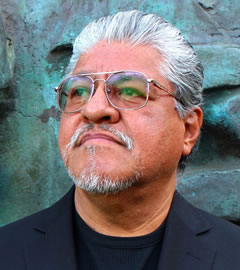
Mixed Genre: Luis J. Rodriguez
Luis J. Rodriguez is author of 17 multi-genre books including the bestselling memoir Always Running, La Vida Loca, Gang Days in L.A. and its sequel It Calls You Back: An Odyssey Through Love, Addiction, Revolutions, and Healing. He’s cofounder with his wife Trini of Tia Chucha’s Centro Cultural & Bookstore in the northeast San Fernando Valley section of Los Angeles. He’s also founding editor of the renown small literary press, Tia Chucha Press. From 2014 to 2016 he served as Los Angeles Poet Laureate. His last book in the U.S. is From Our Land to Our Land: Essays, Journeys, and Imaginings of a Native Xicanx Writer released in 2020. In 2023, Chicanx Sin Fronteras of Mexico City published a bilingual poetry book entitled Todos los caminos llevan a casa (All Roads Lead Home).
Tlahcuilolli--When Writing and the World Meet
“I’m in the world to change the world.”
––Muriel Rukeyser
Tlahcuilolli in Nahuatl means writing of a scribe–a person of letters, metaphors, ideas. Writing is a craft, a mode of expression, a lifestyle. But it’s also more. It can be healing, transformative, and enlightening/endarkening for the writer and audience. It’s an essential art. To paraphrase Rukeyser, when writing meets the world, it can change the world. I have worked with many genres such as poetry, fiction, nonfiction, and children’s literature. I’ve also had plays staged and I’ve been a script consultant for TV and have written film scripts. This workshop will work in any genre, several genres. The challenge in my workshop is to consider readership a major component of your writing life. Integral to your work should be the impact to others, at various levels, of a compelling well-written story, a well-wrought verse, or a powerful stage or film production. Please send by June 20, 2025, the best writing you’ve done in whatever genre you wish. Ten pages of prose OR ten pages of poetry. These will be read aloud in the workshops, not ahead of time by others except by me. I will also work on helping generate new work. I will incorporate psycho-dynamic prompts, which are meant to go deeper into the psyche, not just superficial treatments of subjects or things. I will use prompts like “The Key Log,” “The Train of Life,” “Threshold Times,” “The Fogs that Impair,” and others. As for reading lists, I suggest participants be familiar with my work. The three books to read are “It Calls You Back” (my second memoir), “The Republic of East Los Angeles: Short Stories,” and my essay book, “From Our Land to Our Land.” Of poetry, please read “Borrowed Bones.”
I end this with words from Julia de Burgos: It has to be here, / right this instance, / my cry into the world. / My cry that is no more mine, / but hers and his forever, / the comrades of my silence, / the phantoms of my grave.
Luis J. Rodriguez’s workshop and reading are sponsored by Letras Latinas, the literary initiative at the University of Notre Dame’s Institute for Latino Studies.
Macondo Writers Workshop Seminar Speakers

Creative Writing in the Age of AI: Lillian-Yvonne Bertram
Lillian Yvonne Bertram is an African American writer, poet, artist, and educator whose poetic practice includes the intersection of computation, AI, race, and gender. They are the author of Travesty Generator (Noemi Press), a book of computational poetry longlisted for the 2020 National Book Award for Poetry. They are the recipient of a National Endowment for the Arts Poetry Fellowship. Their other poetry books include How Narrow My Escapes (DIAGRAM/New Michigan), Personal Science (Tupelo Press), a slice from the cake made of air (Red Hen Press), and But a Storm is Blowing From Paradise (Red Hen Press). Their most recent full length poetry book, Negative Money, was published in 2023. Their chapbook, written with AI, is called A Black Story May Contain Sensitive Content and won the 2023 Diagram/New Michigan chapbook contest. They direct the MFA in creative writing program at the University of Maryland and are a 2024 Foundation for Contemporary Arts poetry grant recipient and 2024 Deutsch Foundation Ruby’s Grant recipient. They are co-editor with Nick Montfort of the recently released anthology Output: An Anthology of Computer-Generated Text, 1953-2023.

Everything I Learned, I Learned in a Chinese Restaurant: Curtis Chin
What is the Macondo Writers Workshop?
The Macondo Writers Workshop is an association of socially-engaged writers working to advance creativity, foster generosity, and serve the community. Founded in 1995 by poet and writer Sandra Cisneros and named after the town in Gabriel García Marquez’s One Hundred Years of Solitude, the workshop gathers writers from all genres who work on geographic, cultural, economic, gender, and spiritual borders. An essential aspect of the Macondo Workshop is a global sense of community; participants recognize their place as writers in our society and the world. We are also experienced writers who demonstrate a professional or master’s level of writing. Qualified applicants must meet both criteria. Excellent writing does not excuse poor community spirit; vice-versa, an impressive record of community involvement does not excuse poor writing. Macondo is a gift we give to one another, with willing hands and open hearts.
Macondo Writers Workshop is a weeklong experience for professional writers that is made up of daily workshops with guest faculty, optional afternoon seminars, and evening public readings. We normally hold the workshop annually the last week of July in San Antonio, Texas.
In your first year as a new member, you must participate in a workshop. However, if you return to the Macondo Writers Workshop in the future, you have the option of coming as either a workshop participant or as a Chuparosa (hummingbird), a designation for Macondistas who choose to come and work independently during the workshop time, but who participate in seminars, readings, and within the wider community activities during our week together. Returning Macondistas do not have to reapply to come back again, but they do need to submit an application for the workshop they would like to join, or sign up as a Chuparosa.
When you apply for the workshop, whether you are new or returning Macondista, you select the workshop that you would like to join. We offer workshops across different genres (fiction, poetry, non-fiction, etc.) and each year we invite different distinguished guest faculty. Some past faculty have included: the Poet Ai, Joy Harjo, Julia Alvarez, Helena María Viramontes, Marjorie Agosín, Ruth Behar, Leslie Marmon Silko, Richard Blanco, Sandra Cisneros, John Phillip Santos, Dorothy Allison, Sherwin Bitusi, Luis Rodríguez, Joy Castro, Manuel Muñoz, and others. Acceptance to workshops is based on availability, with workshops generally limited to ten participants.
Past Faculty
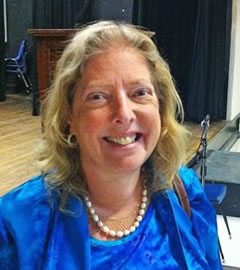
Marjorie Agosín
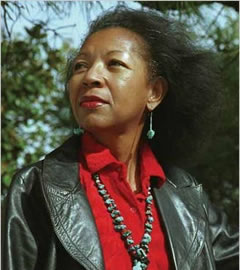
The Poet Ai
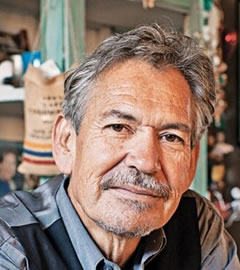
Benjamin Alire Sáenz
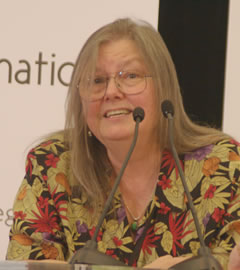
Dorothy Allison
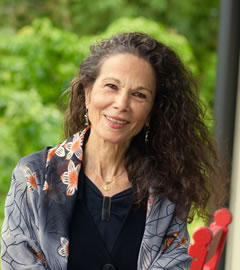
Julia Alvarez
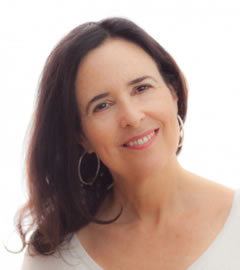
Ruth Behar
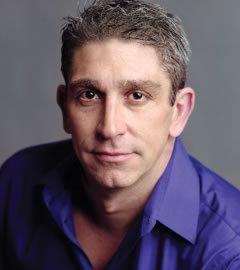
Richard Blanco
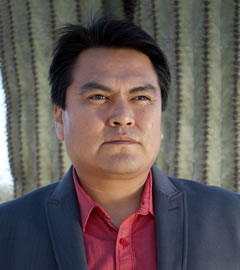
Sherwin Bitusi
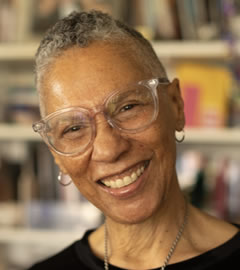
Sharon Bridgforth
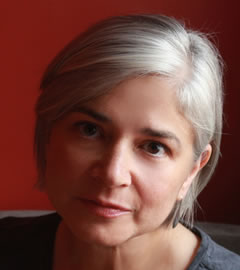
Joy Castro
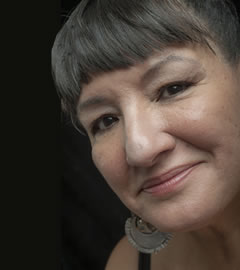
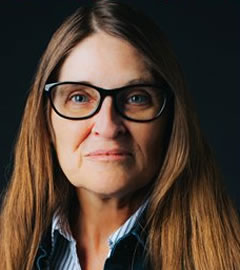
Allison Adelle Hedge Coke
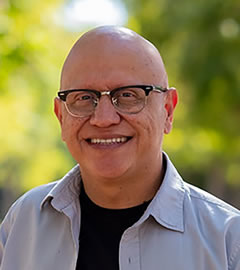
Alex Espinoza
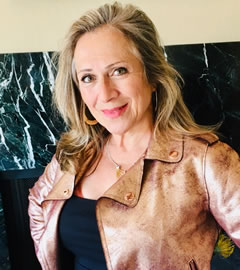
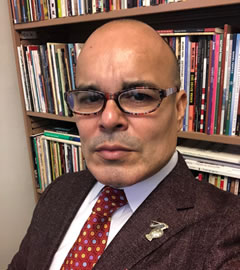
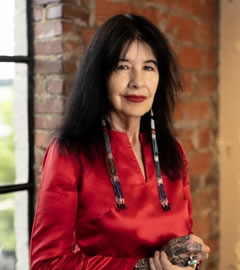
Joy Harjo
Daisy Hernández
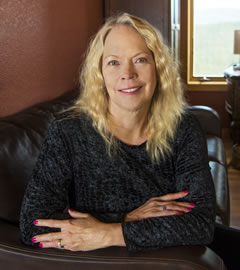
Kristen Iversen
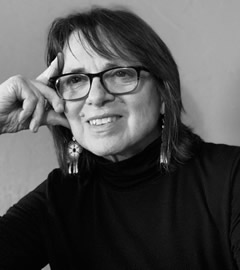
Manuel Muñoz
Urayoán Noel
Ishmael Reed
Cristina Rivera Garza
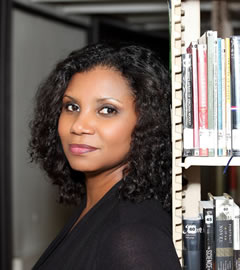
Nelly Rosairo
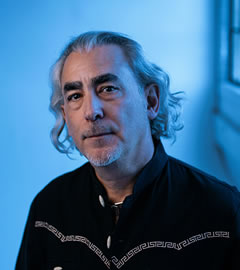
John Phillip Santos
Luis Rodríguez
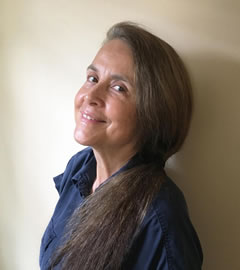
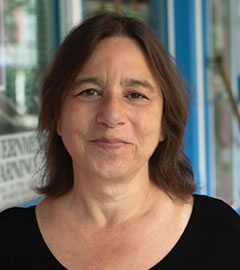
Sarah Schulman
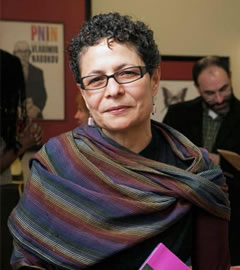
Helena María Viramontes
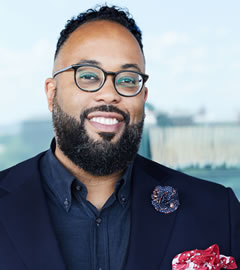
Kevin Young
What does the workshop experience look like?
The workshops are either generative workshops or reading/response workshops. In reading/response workshops, all the participants and faculty read and comment on the manuscripts (usually 10-20 pages) of all their workshop cohort ahead of Macondo. During the workshop week, participants meet every afternoon for three hours and give feedback to two writers in the workshop each day. These morning sessions are confidential and it is mandatory that all participants attend and participate fully. Generative workshops do not require submission of manuscripts. The writing and sharing of writing happens within the workshop week.
As a participant you agree to abide by the Compassionate Code of Conduct, a charter our members have developed to make this workshop experience different. You can expect critical insight and critique, but this is made within a kind, generous, and generative community. Many lasting friendships, collaborations, and projects have grown out of this space. Our mission, then, is to help each other create community, assist others as activist writers, and to continually grow to be better, more empathic, compassionate individuals.
Who can apply?
You! We are a group of experienced writers who demonstrate a professional or master’s level of writing. The workshop gathers writers from all genres who work on geographic, cultural, economic, gender, and spiritual borders. Qualified applicants must meet both high writing standards and dedicated community involvement. It is a highly competitive process and you must be willing and able to offer rigorous, helpful critiques. Excellent writing does not excuse poor community spirit; vice-versa, an impressive record of community involvement does not excuse poor writing. Please review the application for additional details. Each year we accept 3-4 new Macondistas in each workshop. It is a highly competitive process, and writers who do not get accepted are welcome to reapply again in the future. We add a small cohort each year to make sure that we have the resources and space to accommodate their participation and experience. Once you have been accepted you can apply to return to future workshops. At this time we do not have formal requirements for members. We strongly encourage active engagement. Stay in touch with Macondo, share accomplishments and publications, give back regularly, and volunteer to help!
How do you apply?
Workshop applications/registration for the 2027 workshop will open in the first week of January 2027. All essential information is detailed in the application form which is made available via a Slideroom application on our website. If you have general questions, please email macondowriters@gmail.com.
How are applications assessed?
The reading panels, one for each genre, are comprised of a rotating, volunteer panel of Macondistas. The applications are anonymized and judged on strength of essay and writing samples based on the criteria described in the application. Acceptance is based on availability, with workshops generally limited to ten participants.
What are this year’s deadlines?
Applications open annually in January and the deadline for the application materials and a small fee is due in early February. Accepted participants will be notified in early April.
When is the Macondo Writers Workshop held?
The Macondo Writers Workshop is annually held the last full calendar week of July, in-person at Trinity University in San Antonio, Texas.
Can I defer my acceptance?
Because of the logistical difficulties involved, at this time we do not allow accepted participants to defer their admission. If they are unable to attend the year that they are admitted, they must reapply to join again in the future.
How much does it cost?
We aim to keep workshop costs as low as possible to maximize participation. Workshop costs will be posted at the same time as the applications open.
Costs in 2026:
- $855 for Workshop classes
- $350 for Chuparosas (Chuparosa participation is open to returning Macondistas only.)
- $688 for room and board, includes: Single lodging (shared bathroom), breakfast and lunch, linens and facilities. Early Sunday arrival can be added for an additional $35.
- $279 Commuter pass is required for all participants staying off campus.
Participants are responsible for covering the cost of their own transportation, dinners, and incidentals.
Are there scholarships or financial assistance available?
There are no waivers to cover the $37 workshop application and processing fee. A limited amount of partial and full scholarships will be available to accepted participants to attend the workshop, with preference for first-time Macondistas. This amount varies based on the amount of donations that come in and distributed in a way that allows for maximum participation.
Are there ways that I can participate if I’m not a member, or learn more about Macondo Writers Workshop before applying?
Yes! Our workshop week always includes free readings that are open to the public. We also periodically hold events, readings, and fundraisers throughout the year. This year we are proud to partner with Letras Latinas and Gemini Ink to host a community writing workshop in San Antonio that is open to the public. Check Instagram or the Macondo website for more details.
All website content © Copyright 2026 Macondo Writers | Privacy Policy